

Exterior cladding in PVD coloured stainless steel in Copper Mirror
Vessel, Hudson Yards, Manhattan, New York
Architect & Designer: Thomas Heatherwick
Client: Related, Oxford Properties Group
Contractor: Permasteelisa
Introduction to PVD
Maybe this is the first time you have become aware of PVD, the process whereby inorganic materials are coloured through the Physical Vapour Deposition, or PVD, process.
To give you a brief history of this technology, in modern times, PVD started out as a means of reducing friction for tools and moving parts. It was later adopted by engineers to improve engine performance in racing cars.
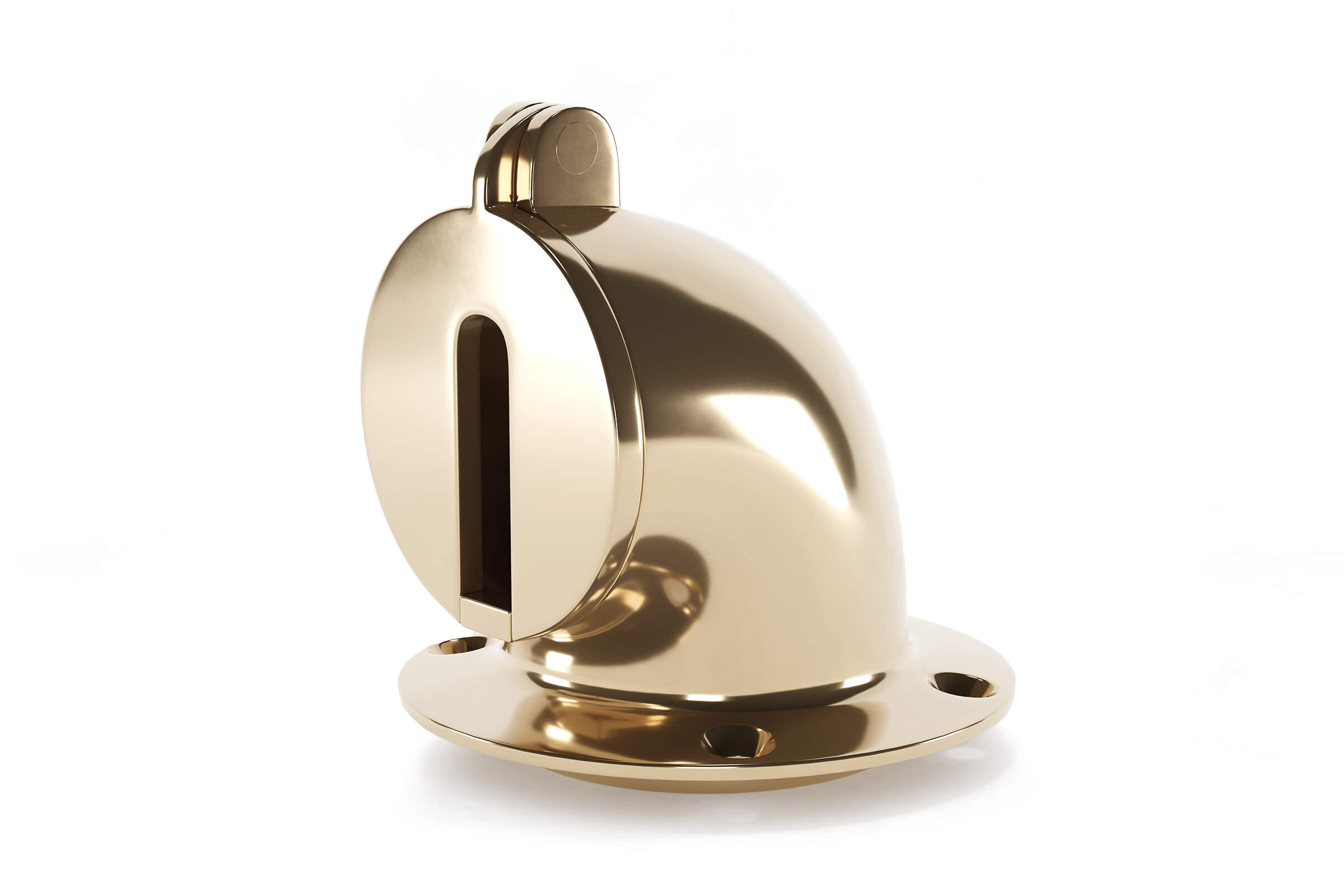
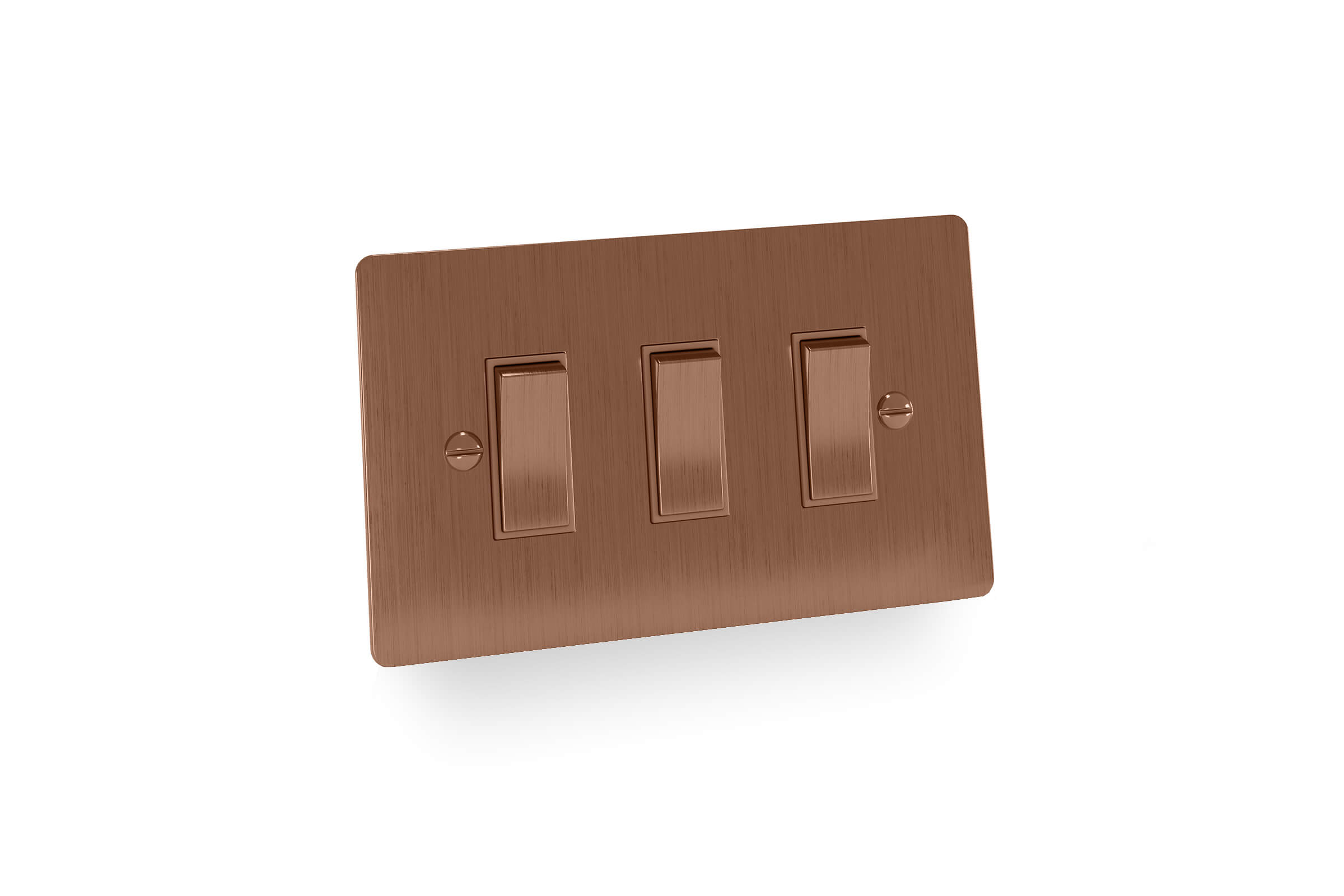
Around the same time, in the 1980s, PVD was used for its scratch-resistance and aesthetic on watches and jewellery in China and went on to be used for appliances and components such as taps, balustrade clamps and grilles. With the larger PVD machines, which are able to colour stainless steel sheet of lengths up to 4.3 metres, this has opened up the use of PVD coloured stainless steel in the architectural field for internal and external cladding and screens.
Although frequently referred to as a “coating” this term implies that PVD is a layer that sits on top of the substrate. In fact when PVD is used to colour stainless steel it actually penetrates the substrate by a few microns making it stronger in the process as well as giving its scratch-resistance.
PVD is an eco-friendly alternative to other metal-colouring methods as it produces no waste products, gases or chemicals. The pre-treatment of stainless steel components and sheet comprises washing with water and citric acid so again, does not involve the use of any harmful solutions.
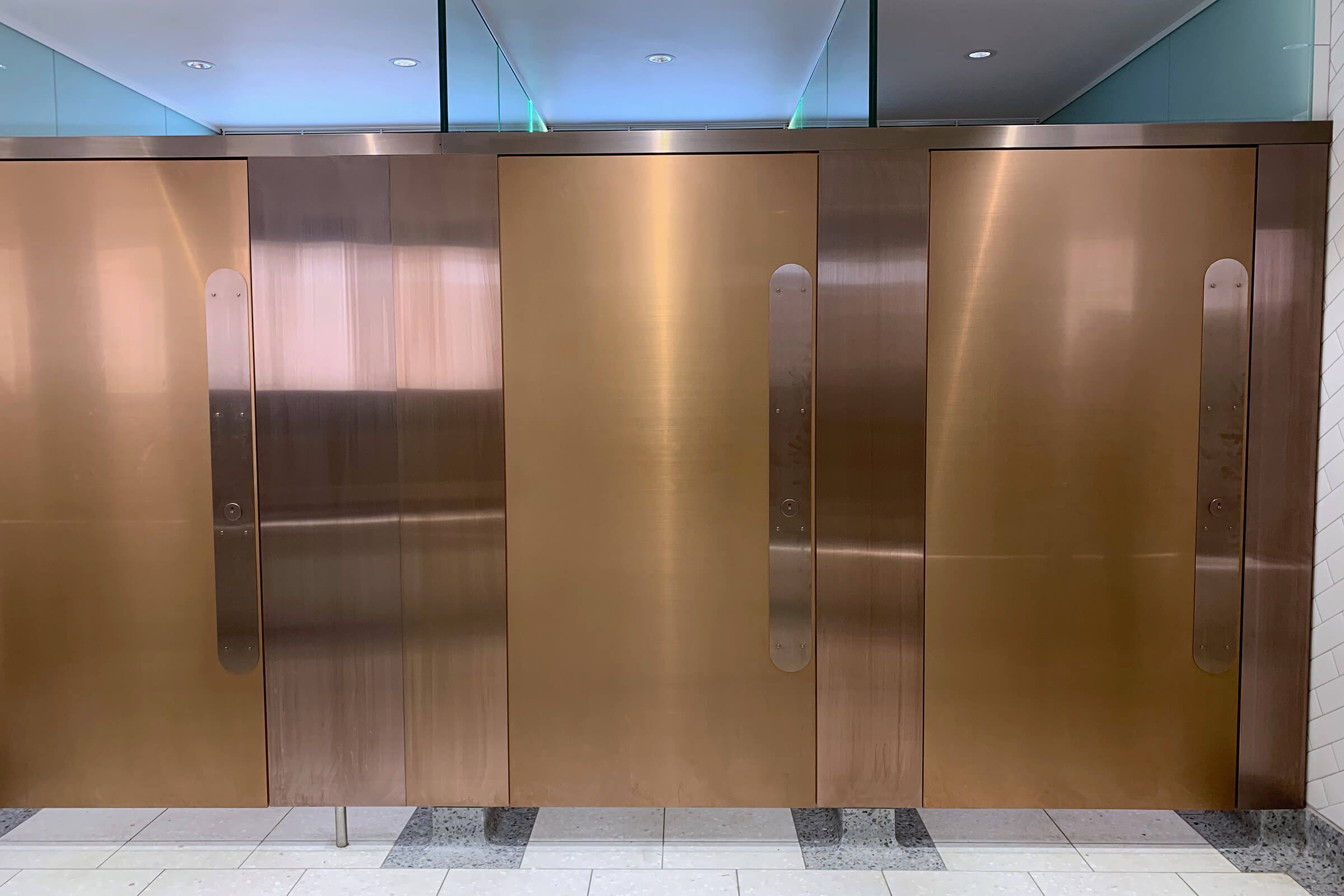
WCs upgrade, Victoria Station, London
Client: Network Rail
Architects: Landolt + Brown
Fitout: Maxwood Washrooms
PVD coloured stainless steel by Double Stone Steel
Architectural metalwork by John Desmond Ltd
What is PVD: a simple explanation of key terms and processes
The key difference in the PVD (Physical Vapour Deposition) process to other types of coatings is that it uses a vaporised form of the coating material for adhesion to a given product surface, not a solution. Examples of coating processes that use solutions would be electro-plating, painting and spraying.
The material or target
Across different industries the terminology will vary however the material which is used to attract the ions is generally called a target. Frequently this target will be Titanium, Ti in the periodic table. It can also be Dichromium Nitride, Cr2N.
The workpiece, product or substrate
This is the item that is to be coloured in the PVD process.
The stages of PVD colouring
The PVD (Physical Vapour Deposition) process consists of four key stages
Evaporation – A titanium disc, or target, is bombarded by a high energy source such as a beam of electrons or ions. This dislodges atoms from the surface of the target, ‘vaporising’ them, therefore depositing the material on the work piece molecule by molecule. This takes place in a vacuum which reduces particle density and provides a long path between particle collisions. Consequently, the vacuum- deposition process is highly accurate, allowing excellent control of the coating’s vapour composition.
Transport – This is the movement of the vaporised atoms from the target to the substrate, or piece to be coated.
Reaction – In cases where metal is the target the PVD coatings will consist of metal oxides, nitrides, carbides and similar such materials. The atoms of metal will then react with the selected gas during the transport stage. The gases used in the above coatings may be oxygen, nitrogen and methane.
Deposition – This is when the coating builds up and bonds to the surface of the substrate. It even penetrates the surface slightly, to give a lasting level of adhesion.
The main types of PVD processes
The main PVD processes are: sputtering, evaporative deposition, arc deposition, electron- beam deposition and pulsed-laser deposition. They relate to the vaporisation methods of the materials to be deposited. Sputtering and thermal evaporation are the two most commonly used.
Sputtering, which is used for thin-film deposition, bombards it with ions from a sputtering gas such as argon which reach the source material at a higher energy level than that which binds its surface. Consequently, the source material ejects ions for deposition on the target substrate.
Evaporative evaporation involves heating the source material to the point when it evaporates into a “coating vapour” which subsequently condenses on the cold surface of the target substrate material.